Wednesday, 13 January 2016

2 articles

#35 Sydney man accused of making rape threats on Facebook pleads not guilty


Zane Alchin, 25, of Caringbah, is charged with threatening rape in comments posted to Facebook in August
'Zane Alchin is alleged to have committed the offence after one of his friends shared a screenshot of a woman’s Tinder profile on his Facebook page'
A Sydney man who allegedly made explicit rape threats on Facebook has pleaded not guilty to using a carriage service to menace.Zane Alchin, 25, of Caringbah was charged in late October for allegedly threatening rape in comments posted to Facebook in August.The offence of using a carriage service to menace, harass or cause offence covers harassment carried out online or over the phone, and carries a maximum jail sentence of three years. Alchin allegedly committed the offence after one of his friends shared a screenshot of a woman’s Tinder profile to his Facebook page with a derogatory caption, sparking a heated argument between the two individuals’ friend groups.The posts allegedly made by Alchin include “You’ll be eating my cock till you puke” and “I’d rape you if you were better looking”.

#36 The social housing tenants taking to Twitter to influence policy
Twitter logo reflected in a pair of glasses that are placed on a computer

Communication is key to any good relationship, even that of landlord and tenant. For many councils and housing associations, working closely with residents is integral to the way they work; it helps them save money and improve services. Andy Orrey, chief executive of Ongo Homes, says it helps him ensure that his organisation provides the right services, in the right places, to the right people. 
But what opportunity for influence is there for tenants who are not part of a traditional involvement structure, or do not want to be? Or whose landlords are not committed to involving their tenants? In the past it might have been a case of writing an angry letter to the local paper or simply bad-mouthing the council or housing association The rise of social media, and in particular the way the housing sector has embraced Twitter, may have changed all that.

Monday, 11 January 2016

Identities and the Media: Reading the riots

How did the language and selection of images in the coverage create a particular representation of young people?
The article represents young people as criminals. It says that they are 'civil disturbances', suggesting that they are not worthy to be part of society as they trouble and irritate everyone within the area. In addition, they are also represented as 'devils'. This is due to the fact that the images in the coverage show an explosion of fire behind the central image (young male dressed in casual clothing) suggesting the young people cause destruction. Also, fire connotes the devil and so they can be portrayed as evil. Furthermore, the title of publication says in big bold letters 'out of control'. This represents young people as rebellious and wild. The article ha given negative representations to the youth.

Why does David Buckingham mention Owen Jones and his work Chavs: the demonisation of the working class?
Jones points to the emergence of a new form of class contempt in modern Britain. According to him, the working class, have become an object of fear and ridicule, not just in this kind of media coverage but also in popular figures such as Little Britain’s Vicky P

What is the typical representation of young people – and teenage boys in particular? What did the 2005 IPSOS/MORI survey find?
The typical representation of young people today are negative on most occasions. They are portrayed as destructive and irritating. In particular teenage boys are the ones who are represented as the most destructive. This is because they are stereotyped in a very negative way in society and are usually the ones who are unmanageable and wild. In addition, the 2005 IPSOS/MORI survey found that 40% of newspaper articles featuring young people focused on violence, crime or anti-social behaviour; and that 71% could be described as having a negative tone.

How can Stanley Cohen’s work on Moral Panic be linked to the coverage of the riots?
A condition, episode, person or group of persons emerges to become defined as a threat to societal values and interests; its nature is presented in a stylized and stereotypical fashion by the mass media; the moral barricades are manned by editors, bishops, politicians and other right-thinking people; socially accredited experts pronounce their diagnoses and solutions; ways of coping are evolved or (more often) resorted to; the condition then disappears, submerges or deteriorates and becomes more visible. His work on moral panics can link to the coverage of the riots as it creates agitation and fear within people, when people go against society's norms and cause damage everywhere.

What elements of the media and popular culture were blamed for the riots?
It was rap music, violent computer games or reality TV that was somehow provoking young people to go out and start rioting. The Daily Mirror, for example, blamed the pernicious culture of hatred around rap music, which glorifies violence and loathing of authority (especially the police but including parents), exalts trashy materialism and raves about drugs.
  • Mark Duggan
  • The relationship between the police and the black community
  •  Social networking sites
  • University fees
  • Unemployment

How was social media blamed for the riots? What was interesting about the discussion of social media when compared to the Arab Spring in 2011?
The rioters were seen as somehow skilful enough to co-ordinate their actions by using Facebook, Blackberry and Twitter. The Sun, for example, reported that ‘THUGS used social network Twitter to orchestrate the Tottenham violence and incite others to join in as they sent messages urging: ‘Roll up and loot’. The ‘Arab spring’ earlier this year were discussions about the use of social networking in the revolutions that took place in countries such as Tunisia, Egypt and Syria – although in those instances, this was generally interpreted by the Western media as a positive. These observations in turn caused some – such as Tottenham MP David Lammy – to call for companies like Blackberry to suspend their services. Some even argued – quite absurdly – that the police might be empowered to ‘turn off the internet’ at the first sign of trouble.

The riots generated a huge amount of comment and opinion - both in mainstream and social media. How can the two-step flow theory be linked to the coverage of the riots?
The two-step flow theory links to the coverage of the riots as

Alternatively, how might media scholars like Henry Jenkins view the 'tsunami' of blogs, forums and social media comments? Do you agree that this shows the democratisation of the media?

What were the right-wing responses to the causes of the riots?
Max Hastings of the daily mail headed, ‘Years of liberal dogma have spawned a generation of amoral, uneducated, unparented, welfare dependent, brutalised youngsters’.
For some right-wing commentators, it is parents who are principally to blame for this situation; while others, such as Katharine Birbalsingh, blame schools for failing to instil discipline and respect for authority – especially, according to her, in black children. For some, this failure even extends to the police – as for one Daily Telegraph letter writer, who argued that the riots were ‘a result of the police caring more for community relations than for the rule of law’. Framing the issue in this way, as a failure of discipline, thus inevitably leads to a call for disciplinary responses.
What are your OWN views on the main causes of the riots?

What were the left-wing responses to the causes of the riots?
They argue that it was unsurprising that of the disturbances erupted in areas with high levels of poverty and deprivation – and, they point out, it was tragic that these communities also bore the brunt of the damage. More specifically, they point to the cuts in youth services (Haringey, the borough in which Tottenham is located, recently closed 8 of its 13 youth clubs), rising youth unemployment (which is now over 20% in the 18-25 age group) and the removal of the Education Maintenance Allowance.

How can capitalism be blamed for the riots? What media theory (from our new/digital media unit) can this be linked to?
Capitalism can be blamed for the riots as they have too much control in society, which can cause members of the public to rebel. For example, laws made by the capital may only be beneficial for the ruling class rather than the working class. This can cause chaos in society as the working class will not agree to these laws resulting in riots/protests to stop them from occurring. Also, Andrew Keen states that 'blogs and web pages are like a million of monkeys typing nonsense'. Suggesting that people may make up inaccurate and false information and upload it online such as faking a law which no one will agree with, causing others to join the raging crowd. Due to new and digital media, members of the public are able to send messages, pictures etc to friends and tell them about what is happening and persuade them to join the riots. This would eventually go round to the majority of the public creating a huge riot.

Were people involved in the riots given a voice in the media to explain their participation?
Riots are sometimes sparked by specific events, but in other cases they appear to be almost arbitrary and spontaneous.Riots may well have deep-seated social causes; but there is often an emotional element– even a kind of adrenaline rush. There may be a copycat effect (which is similar to Cohen’s idea of ‘deviance amplification’): people may respond to rumours or media coverage of riots in other areas by seeking to ‘make their mark’ in the media. There may also be an element of opportunism, as people take the chance to indulge in behaviour that would normally be taboo.

In the Guardian website's investigation into the causes of the riots, they did interview rioters themselves. Read this Guardian article from their Reading the Riots academic research project - what causes are outlined by those involved in the disturbances?
What is your own opinion on the riots? Do you have sympathy with those involved or do you believe strong prison sentences are the right approach to prevent such events happening in future.
In my opinion, i do sympathize with the riots. However, some younger In the Guardian website's investigation into the causes of the riots, they did interview rioters themselves. Read this Guardian article from their Reading tIn the Guardian website's investigation into the causes of the riots, they did interview rioters themselves. Read this Guardian article from their Reading tIn the Guardian website's investigation into the causes of the riots, they did interview rioters themselves. Read this Guardian article from their Reading tIn the Guardian website's investigation into the causes of the riots, they did interview rioters themselves.  

Friday, 8 January 2016

NDM institution case study: News Corporation

Some of the ideas we have discussed in class regarding the impact of new and digital media on News Corp include:
·         Online subscriptions/paywalls
·         Price promotions for newspapers
·         Impact on institution content and its appeal
·         Paid subscriptions for TV content
·         Quality of journalism
·         User generated content
·         Social media/online news providers (Huff Post, Ampp3d etc.)

Tasks

1) Research News Corporation’s response to the growth of new and digital media by listing each of the institution’s brands (Sky News, Times etc.) Have any closed, changed or been in the news in the last 10 years for any reason?

  • The sun: took away their pay walls
  • Sunday times
  • Fox Entertainment
  • News international
  • The times

2) Develop examples of the impact that new and digital media has had on News Corp’s brands (paywalls, readership figures, audience share etc.) 
New and digital media has been negative to the news brands due to factors such as having a decline in the newspaper industry due to access of news online or on your smart phone via an Internet connection. This has therefore had an decline in newspapers as audiences are more likely to view news online rather then on paper especially the younger audience.

New and digital media is a popular platform and that traditional media institutions have fell down in their position on the hierarchy. Traditional media institutions are making less profit due factors such as having news to be accessed online on a much easier and faster platform. Also social network sights such as Twitter make it easier for audiences to stay on track with the news which is why traditional media had fallen massively. Also money raises an issue as accesses news online is free for audiences however newspapers could cost, however it could be argued that to view news online they would therefore need an Internet connection which could stop them from viewing news online.

Why and with what success are traditional media institutions adapting to the challenge posed by new/digital media?
Traditional media institutions are making the shift onto social media and making the most of e-media in particular, why? because this is the way the they can increase readership and continue the longevity of the brand. Being on-line and giving free news to people is what the current flow of the news world is currently witnessing, without this they would be so far behind by the advanced of NDM. Particularly in the interest of the likes of twitter and snapchat where news is more powerfully of interest for consumers because it is compressed and visual to attract the attention of today's youngsters. Traditional media such as print will seize to exist in 15 years because we might aswell have holographic huds that pop up from our watches on the go, purchasing and wasting paper is going to benefit no-one. 

Monday, 4 January 2016

2 articles

#33Twitter unveils revised rules regarding hate speech in posts


Twitter logo

Twitter has clarified its definition of abusive behaviour that will prompt it to delete accounts, banning what it calls hateful conduct that promotes violence against specific groups.The social media company disclosed the changes on Tuesday in a blog post, following rising criticism it was not doing enough to thwart Islamic State’s use of the site for propaganda and recruitment.“As always, we embrace and encourage diverse opinions and beliefs, but we will continue to take action on accounts that cross the line into abuse,” said Megan Cristina, director of trust and safety. The new rules do not mention Isis or any other group by name.“You may not promote violence against or directly attack or threaten other people on the basis of race, ethnicity, national origin, sexual orientation, gender, gender identity, religious affiliation, age, disability or disease,” according to the revised rules.

  • Tuesday’s announcement did not disclose changes to Twitter’s enforcement strategy. A company spokesman declined to say if any were in the works.
  • The new rules also said that Twitter might respond to reports that somebody is considering self-harm by contacting the person to express concern and provide contact information to mental health practitioners.


#34Turn off, shut down, log out: the digital detox holiday is here


Couple on a remote beach

The trend for “digital detox” has been around in the America for some time, but the urge to go “off grid” is taking hold here too, along with a mini-boom in specialist companies looking to cash in. This month, pop star Ed Sheeran announced he was stepping off the social media bandwagon – no mobile phones, emails or Twitter for a whole year. “I find myself seeing the world through a screen and not my eyes,” he wrote (on his Instagram account, of course).
  • Tanya Goodin, the founder of Time To Log Off, knows how he feels. Her eureka moment came when she realised she hadn’t read a book in four years. “I thought, wow, how did that happen? I realised it was about my attention span. My focus was gone,” she says.
  • After 20 years running a digital marketing agency, she decided to break away and launch her detox company, which offers retreats in places such as Hawaii, Italy and Cornwall.

2 articles

#32Has social media ruined the web?http://www.theguardian.com/media/2015/dec/31/has-social-media-ruined-the-web

Logo of the Twitter and Facebook seen through a magnifier.

Has the web lost its power to drive social change? This is the conclusion of Iranian blogger Hossein Derakhshan, imprisoned by the regime in 2008 and released and pardoned in 2014.  
The rise of smartphones and apps had changed the online world. Blogging and independent websites had been overtaken by social media networks, with the likes* of Facebook, Twitter and Instagram dominating the market.

  • "Nearly every social network now treats a link as just the same as it treats any other object – the same as a photo, or a piece of text. You’re encouraged to post one single hyperlink and expose it to a quasi-democratic process of liking and plussing and hearting. But links are not objects, they are relations between objects. This objectivisation has stripped hyperlinks of their immense powers"
#31 Telegraph criticised by watchdog for 'misleading' Michelin advertorial
The Telegraph home page

The Telegraph has been reprimanded by the advertising watchdog for failing to adequately label an online advertorial for Michelin tyres. The Advertising Standards Authority said the article and video on Telegraph.co.uk, which compared Michelin tyres with an unnamed budget brand, were misleading and did not make it clear they had been paid for.The Telegraph argued that visual and written cues, such as the words “in association with Michelin” indicated there was a financial arrangement. However, the ASA said the labelling was “insufficient to identify the content specifically as an ad” rather than sponsored editorial, over which the newspaper retained control.

  • Labelling of sponsored and paid-for articles is becoming an increasingly thorny issue for publishers, which have turned to “native” advertising that looks like editorial to compensate for falling revenues from traditional print and display advertising online.
  • Online-only publishers such as BuzzFeed have focused heavily on paid-for articles and many have strict guidelines on how to ensure readers are aware they are seeing an ad.

2 articles

#29 The #BringBackOurGirls of 2016: what will dominate Africa's Twittersphere this year?


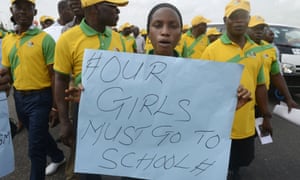
Nearly two years days after the Chibok schoolgirls were kidnapped by Boko Haram, the right to education in Nigeria has dominated debate.


Hashtags have become a key way to measure how millions of people react to the biggest news events and debates of the day. They’re also where some of the best jokes are made. Mapping this trend, satirical news site YesiYesighana and digital bloggersCircumspecte have just released their list of the most influential topics debated by Africans on Twitter (#AOT) in 2015. From #BringBackOurGirls which, on 6 December, marked 600 days since the schoolgirls of Chibok were abducted by Boko Haram, to #WhatWouldMagufuliDo, a tribute to the newly-elected Tanzanian president’s “revolutionary” commitment to cutting wasteful government spending, looking back at popular hashtags offers a useful overview on how the big events of the year played out online. “If African Twitter was a bar then the year 2015 would have been one of those memorable nights out,” YesiYesighana said. “Noisy drinkers would be eating jollof while debating xenophobia, everyday sexism and everything in between.
#30 Anti-Isis hackers claim responsibility for BBC cyber-attack
Lynam told BBC Breakfast that the technology correspondent, Rory Cellan-Jones, had received a tweet from a group calling itself New World Hacking (NWH), claiming responsibility for a distributed denial of service (DDoS). It bombarded the system with 600 gigabits a second of messages. The New Year’s Eve attack took down the iPlayer and other services for a few hours, according to Joe Lynam, the BBC’s business correspondent. Lynam said: “Their ultimate goal, believe it or not, is not to attack the BBC but to go for Isis, the group which often calls itself Islamic State, and all their servers so they cannot spread propaganda from various different websites.“What this group does is to take down various different websites it believes to be criminal and leading to terrorist acts. It posts the website which has been taken down with the hashtag ‘tangodown’ or ‘takendown’ deliberately by a distributed denial of service (DDoS), which is what hit the BBC two days ago.“We have to stress we have no evidence, but this group is claiming responsibility for this DDoS attack and they claim their ultimate goal is to take down Isis websites.”
  • “The reason we really targeted [the] BBC is because we wanted to see our actual server power. It was only a test, we didn’t exactly plan to take it down for multiple hours.”